International transportation of dangerous goods
International transportation of dangerous goods is the cross-border movement of substances and materials that can cause explosion, fire, poisoning, or environmental damage, using various modes of transport (road, sea, rail, air). It is strictly regulated by international agreements: ADR for road transport, the IMDG Code for sea transport, ICAO-TI for aviation, and RID for rail. BSF ensures reliable delivery via the ports of Novorossiysk, Saint Petersburg, and Rostov-on-Don with minimal risks and transparent timelines.
Transportation across the border of the Russian Federation
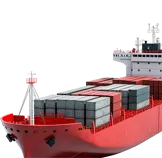
Sea transport of this type of cargo across the border of the Russian Federation includes container and bulk carrier schemes. Our company offices are located in key Russian ports — Novorossiysk, Rostov-on-Don, Saint Petersburg — where we provide a full cycle from loading to customs clearance.
We organize multimodal routes, combining sea transport with road transport for optimal cost and timelines. Entrust your export or import to us — and receive cargo safety guarantees and prompt delivery.
Who is this service for?
This service is beneficial for enterprises engaged in the import or export of dangerous goods from abroad. Wholesale buyers, trading and manufacturing companies in the chemical and petrochemical industries gain a reliable contractor. With BSF, you minimize delays and optimize logistics.
Special features of international dangerous goods transportation
The requirements for transporting this type of nomenclature are determined by the risks to people, animals, transport, and the environment. Special packaging, orange diamond labeling, and qualified personnel with ADR certification are required.
Transportation is permitted only using certified equipment, taking into account the hazard class and route. Violation of the rules entails fines, confiscation, or revocation of the carrier's licenses, so BSF strictly follows ADR and IMDG regulations.
It should be understood that port terminals have very strict rules for handling dangerous goods. In Novorossiysk, they cannot be handled within the port area. Our company handles them under the "direct option" scheme.
What is "direct option" haulage?
"Direct option" haulage is the handling of dangerous goods directly from the vessel onto a truck without storage at the port. This scheme minimizes downtime and costs, especially in Novorossiysk and Tuapse, where coordination with the terminal is required.
BSF has contracts with port terminals for direct option handling, which speeds up the process and reduces costs. This is ideal for urgent shipments with a high degree of danger.
Stages of transportation

Analysis and classification of the cargo;
01

Verification of documents and packaging;
02

Loading onto specialized transport;
03

Transportation with monitoring;
04

Unloading, customs clearance, port agency services;
05

Delivery to the consignee.
06
Classification
Dangerous goods are classified into 9 classes according to ADR and IMDG.
-
Class 1: Explosive substances (TNT, ammunition)
-
Class 2: Gases (flammable, toxic, such as propane or aerosols)
-
Class 3: Flammable liquids (gasoline, solvents)
-
Class 4: Spontaneously combustible and flammable solids (phosphorus, magnesium)
-
Class 5: Oxidizers and organic peroxides (hydrogen peroxide)
-
Class 6: Toxic and infectious substances (arsenic, biological products)
-
Class 7: Radioactive materials
-
Class 8: Corrosive substances (acids, alkalis)
-
Class 9: Miscellaneous (lithium batteries, asbestos)
This system is unified across all modes of transport.
Equipment for transportation
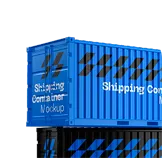
Equipment for transporting dangerous goods includes specialized containers, tankers, and bulk carrier vessels with reinforced construction. Road vehicles are equipped with fire extinguishers, warning vests, and emergency response systems in accordance with ADR.
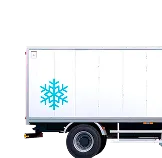
For sea transport, tankers and reefers with temperature control systems are used. Our company uses certified equipment compliant with IMDG for bulk carrier shipments.
Labeling of dangerous goods
Labeling is mandatory for risk identification and includes an orange diamond (hazard placard) measuring 100x100 mm with a pictogram, class number, and UN number. According to ADR and IMDG, the placard features a red or black symbol on a white background, with the class number at the bottom; for sea transport, marine pollutant marks are added.
An orange reflective placard (400x300 mm) with a Kemler code must be affixed to the transport vehicle for emergency response measures in case of substance spillage. BSF ensures proper labeling at all stages, minimizing risks.
Advantages of shipping with BSF
-
Experience in bulk carrier transportation via Novorossiysk, Saint Petersburg, and Rostov;
-
Comprehensive service: from consultation to delivery;
-
Individual calculation of cost and timelines;
-
Cargo safety guarantees and insurance;
-
Multimodal schemes to reduce costs.
Call now for a free consultation and quote — we will ensure fast and safe international sea transportation of dangerous goods!

Cost and how to order transportation
The cost of transportation is calculated individually by our managers for each type and consignment of cargo.


Прямые договоры
с НЛЭ и НМТП
с НЛЭ и НМТП

Why customers choose BSF

Exclusive ocean freight rates
Thanks to our long-standing and successful track record in export shipments, we have earned the loyalty of key ocean carriers. This enables our clients to access unique freight rates for export and import flows, saving up to 20–30% compared to base tariffs.

Focus on complex cargo
We work with bulk cargo, full vessel lots, sawn timber, metal ingots, coils, big bags, oversized cargo and containerized shipments. Cargo accumulation and dispatch are handled smoothly, with full processing in Novorossiysk.

Unique stuffing and transshipment solutions
Our core know‑how lies in direct contracts with Novorossiysk ports covering re‑stuffing and transshipment of various cargo types. This ensures fast, safe and cost‑efficient handling for virtually any cargo.

Turnkey end‑to‑end service
From container delivery and removal to customs formalities and documentation, including interaction with FGBU “TsOKZ”, FGBU “VCR”, certification and permits – all processes are managed by a single provider. One contractor means fewer complications for your business.

Expertise in key industries
We have extensive experience working with the agro‑industrial sector, chemical industry, wood processing, mining and metallurgy. Grain logistics in vessel holds is one of our core specializations.

Extensive agents’ network
We maintain close working relationships with shipowners and operators and rely on a global network of agents. Our operations cover the ports of Novorossiysk, Saint Petersburg, Rostov‑on‑Don, Azov, Yeysk, Kavkaz, Astrakhan, Olya, Arkhangelsk and Aktau, with partner companies in Turkey, Jordan and the UAE.
Our services


Do you have any questions?
Fill out a short form and our specialists will contact you and answer all your questions.