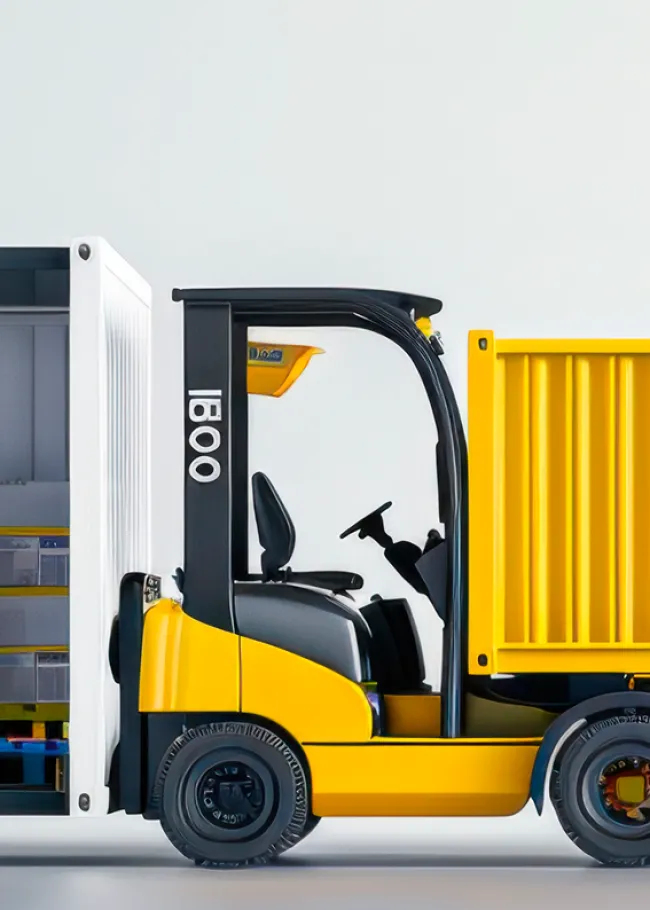
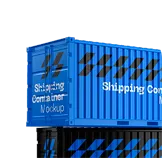
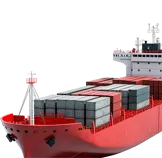
BSF organizes international transportation of perishable cargo using bulk carrier vessels and refrigerated containers via the ports of Novorossiysk, Rostov-on-Don, and Saint Petersburg. You receive a stable temperature range from -60°C to +40°C, minimizing the risk of product spoilage.
Our presence in key Russian ports enables international refrigerated cargo transportation through these ports from Asia, the Middle East, South America, etc., to any location in Russia via the optimal route with precise compliance with conditions.
The delivery of this type of cargo in international logistics is considered a "challenging" task, as such goods require close attention, specialized equipment, special documentation, and additional border controls.
However, for the past 10 years, our company has specialized in this type of transportation on container and bulk carrier vessels. Our specialists can provide the entire chain on a turnkey basis.
What is the difference between these types of cargo?
-
Perishable cargo (Perishables) — goods that quickly lose quality: meat, fish, dairy products, fruits, vegetables, flowers. They require a strictly defined temperature (frozen or chilled) throughout the entire journey.
-
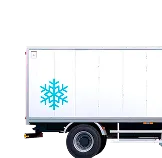
Refrigerated cargo — cargo transported in a reefer — a truck/trailer with a refrigeration/heating unit. This is not just a "thermos"; it actively maintains a set temperature (from -30 to +30°C) regardless of external conditions. Reefers are used for long-distance transport.
-
Temperature-controlled cargo — a broader concept. Includes not only perishables but also goods that can be damaged by freezing (e.g., paint, beverages) or that require maintaining a specific "warm" regime in winter (some chemical compounds, fertilizers, oils).
Types of such cargo
-
Meat, fish, seafood
-
Fruits, vegetables, berries
-
Dairy products, cheeses
-
Confectionery products, frozen foods
-
Pharmaceuticals, biomaterials
-
Flowers, plants
-
Chemicals with temperature requirements
-
Beverages, wines
Each type receives individualized ventilation, freezing, or temperature maintenance conditions.
Who is this service for?
This service is in demand among wholesale suppliers, manufacturers, and trading companies working with the transportation of perishable goods from China, Turkey, Southeast Asia, the UAE, Egypt, and other countries. The ports of Novorossiysk, Saint Petersburg, and Rostov-on-Don provide convenient access to international routes.
Companies benefit from reduced spoilage losses and stable supplies for retail, pharmaceuticals, and the agricultural sector.
Special features of temperature-controlled transportation
Temperature-controlled cargo transportation requires perfect document order: any errors in the invoice, an expired phytosanitary certificate, or the absence of a clearly stated temperature regime become grounds for stopping a reefer container at the port. While clarifications and document re-issuance take place, the container sits in the customs control zone, leading to daily demurrage charges and the risk of cargo loss due to cold chain disruption. In maritime logistics of perishable goods, any delay is critical: if the temperature maintenance chain is broken, the product loses quality and very quickly turns from commercial goods into direct losses.
Properly prepared documents for reefer cargo are not a mere formality but a primary tool for risk mitigation. Each country has its own veterinary, phytosanitary, and customs requirements, and without a complete set of documents, the cargo will simply not be cleared for shipment or entry. Errors in the invoice, bill of lading, or reefer container request can lead to the port or vessel refusing the cargo, while incorrectly prepared veterinary or phytosanitary certificates can cause delays and additional inspections at the border. Without correct temperature regime records, the insurance company may refuse to pay out, even if the product did indeed spoil in transit. In extreme cases, regulatory authorities at the destination port may decide to destroy the shipment, in which case the cargo owner suffers losses not only from the loss of goods but also from accumulated storage and demurrage costs.
Stages of temperature-controlled cargo transportation

Analysis of requirements, cost calculation, and selection of temperature regime;
01

Loading into reefer containers at the terminal in the country of origin;
02

Sea transportation with online monitoring;
03

Unloading from the vessel;
04

Undergoing sanitary-quarantine, phytosanitary, veterinary, and customs control;
05

Multimodal delivery to the consignee's warehouse.
06
Advantages of working with BSF
BSF ensures temperature-controlled cargo transportation with 10 years of experience.
Clients receive:
-
24/7 monitoring with notifications;
-
Individual calculation of transport conditions;
-
Comprehensive multimodal service through all key ports;
-
Transparent cost calculation with no hidden fees.
Transportation is possible year-round. You receive cargo safety and precise adherence to deadlines.
Contact us to calculate the cost of your shipment.

Cost and how to order transportation
The cost of transportation is calculated individually by our managers for each type and consignment of cargo.


Прямые договоры
с НЛЭ и НМТП
с НЛЭ и НМТП

Why customers choose BSF

Exclusive ocean freight rates
Thanks to our long-standing and successful track record in export shipments, we have earned the loyalty of key ocean carriers. This enables our clients to access unique freight rates for export and import flows, saving up to 20–30% compared to base tariffs.

Focus on complex cargo
We work with bulk cargo, full vessel lots, sawn timber, metal ingots, coils, big bags, oversized cargo and containerized shipments. Cargo accumulation and dispatch are handled smoothly, with full processing in Novorossiysk.

Unique stuffing and transshipment solutions
Our core know‑how lies in direct contracts with Novorossiysk ports covering re‑stuffing and transshipment of various cargo types. This ensures fast, safe and cost‑efficient handling for virtually any cargo.

Turnkey end‑to‑end service
From container delivery and removal to customs formalities and documentation, including interaction with FGBU “TsOKZ”, FGBU “VCR”, certification and permits – all processes are managed by a single provider. One contractor means fewer complications for your business.

Expertise in key industries
We have extensive experience working with the agro‑industrial sector, chemical industry, wood processing, mining and metallurgy. Grain logistics in vessel holds is one of our core specializations.

Extensive agents’ network
We maintain close working relationships with shipowners and operators and rely on a global network of agents. Our operations cover the ports of Novorossiysk, Saint Petersburg, Rostov‑on‑Don, Azov, Yeysk, Kavkaz, Astrakhan, Olya, Arkhangelsk and Aktau, with partner companies in Turkey, Jordan and the UAE.
Our services



Do you have any questions?
Fill out a short form and our specialists will contact you and answer all your questions.