Export of grain, agricultural and agri-food products from Russia
BSF offers its clients bulk carrier and container transportation services for grain, agricultural products, and agri-food products via the ports of Novorossiysk, Rostov-on-Don, and Saint Petersburg. We deliver wheat, barley, corn, and other crops to China, Turkey, Egypt, India, African countries, and other markets, managing the entire supply chain including fumigation and quality control.
Grain trade is fundamental to the country's GDP. In 2025, Russia exported 50 million tons of grain, including 41 million tons of wheat, with the potential to reach 55 million tons in 2026.
We provide this service at key Russian ports with terminal transshipment options in Novorossiysk, Saint Petersburg, and Rostov-on-Don.
Our clients include agricultural holdings, elevator operators, trading firms, and producers focused on food exports from Russia. We handle international transportation of agricultural products, minimizing spoilage losses while offering transparent timelines and costs.
Trust BSF — and gain access to global markets hassle‑free.
Special features and requirements of Russian legislation for the transportation of grain, agricultural and agri-food products
The export of agricultural products in Russia is regulated by the Ministry of Agriculture. For example, the wheat quota for 2025 is 10.6 million tons under tariff‑rate quotas from February 15 to June 30, 2025. The quota for barley, corn, and rye during this period is set at 0 tons.
The grain export quota for 2026 is distributed by region.
According to the "Rules for the Transportation of Grain Cargo" (RD 31.11.25.25-96) Order No. 43 of the Russian Federal Maritime Service, grain cargo offered for transport must comply with state or international standards as well as technical specifications. Grain must be uniform in moisture content: mixing dry grain with moist or wet grain is not permitted.
Grain cargo with moisture content above established norms is not accepted for carriage, specifically: cocoa beans — more than 8%; coffee and sesame seeds — more than 10%; peanuts — more than 11%; soybeans — more than 14%; barley — more than 14.5%; sorghum, millet, and flour — more than 15%; rice, rye, oats, wheat, and corn — more than 15.5%; peas and feed beans — more than 16%. For groats and compound feed, the requirements of the relevant GOST standards apply.
Furthermore, grain cargo is not accepted for carriage if it is in a state of self‑heating, infested with pests, lacking necessary phytosanitary and quality documents, not degassed after gas disinfestation, showing signs of moisture damage, musty or moldy odor, violating safety requirements, or packed in unsuitable containers.
These same rules mandate compulsory phytosanitary control by Rosselkhoznadzor.
Stages of transportation

Delivery to the port
grain and seeds are most often delivered to ports by road transport;
01

Storage
at the port, the cargo is accumulated in warehouses until a shipload lot is formed;
02

Customs clearance
before loading, the consignment undergoes customs declaration and the preparation of other documentation in accordance with the requirements of the destination country;
03

Loading onto the vessel
port equipment loads the cargo onto the sea vessel;
04

Sea transportation
the vessel transports the cargo by sea;
05

Unloading
at the destination port, the cargo is unloaded using port equipment.
06
Difference between bulk and container transportation
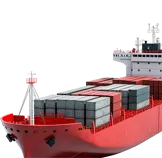
Bulk transportation of agricultural products (loose in vessel holds) is cost-effective for large shipments (thousands of tons), ensuring low transport costs. However, not all terminals have specialized equipment for handling such cargo.
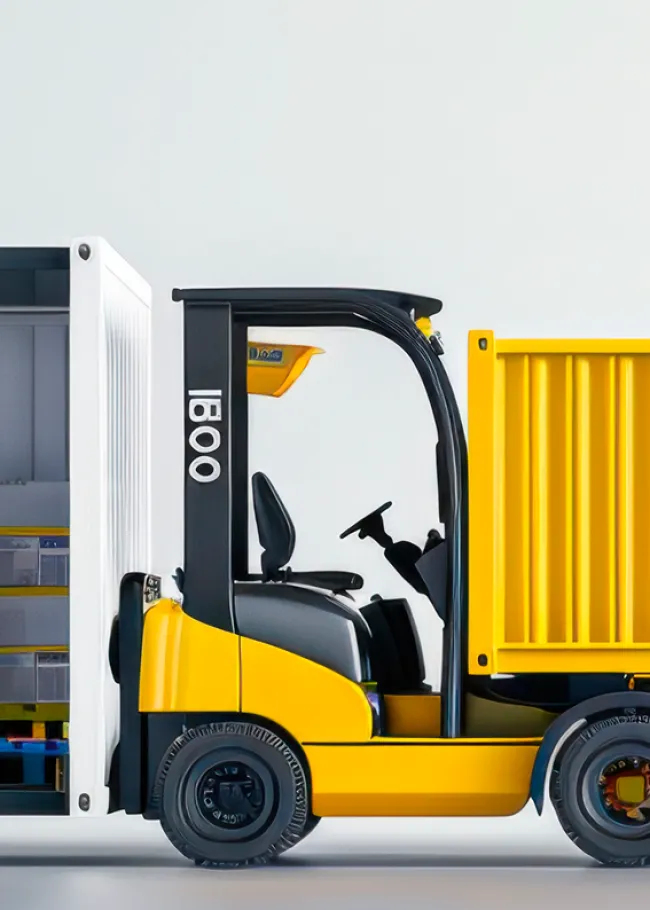
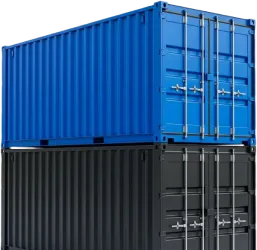
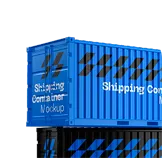
Container delivery should be chosen for smaller consignments (up to 25–30 tons). This mode of transport guarantees cargo safety, enables multimodal shipping (rail + road), and protects against moisture, though the cost per ton is higher. Additionally, containers do not require port transshipment and can be delivered directly to the client's warehouse.
Types of cargo nomenclature
The grain export service provided by our company covers the main crops. We transport:
- Wheat, triticale
- Barley, corn, rye
- Agricultural products: seeds, meal, flour
- Agri-food products: legumes, groats, animal feed.
Packaging requirements for agricultural products for export
Packaging requirements for agricultural products (grain, seeds, legumes, meal) for export are regulated by TR CU 005/2011, international standard ISPM 15, phytosanitary norms of Rosselkhoznadzor, and the importing country's regulations. Packaging must ensure product integrity, tightness, pest protection, and compliance with sanitary and hygienic standards, minimizing the risk of spoilage during sea transport via Novorossiysk or Saint Petersburg.
General requirements under TR CU 005/2011
Packaging must be safe for the product: it must not release harmful substances, must be strong, and resistant to moisture, chemicals, and mechanical stress. For grain, it is particularly important that packaging protects against moisture, contains no dust, and does not cause product oxidation. Acceptable packaging includes polymer bags, jute bags, 1–2 ton big bags, as well as cardboard boxes with inner liners. Wooden packaging is only allowed if treated under ISPM 15, i.e., heat-treated at 56°C for 30 minutes.
Packaging must be sealed: seams must withstand loads of up to 300 kg, and lids must be resistant to acids and alkalis. Packaging must display information in Russian or English: net weight, batch number, packaging date, and a mark indicating "For Export". If wooden packaging is used, it must also bear the IPPC stamp.
Requirements by product type
For grain and groats, 50 kg bags or big bags with an inner polypropylene liner are typically used. For bulk transport in bulk carriers, ventilation and phosphine fumigation for pest protection are required. Seeds and legumes must be packed in sealed bags, with moisture content strictly controlled — not exceeding 12%. For meal, flour, and other agri-food products, soft containers or 20-foot containers with liners are used to protect the cargo from condensation.
For export to China, packaging and products must comply with GB 4806 requirements: a declaration of conformity, "fork-and-spoon" labeling, and testing for heavy metal content are needed. For deliveries to the EU, EC 1935/2004 applies: materials must be inert and undergo migration testing, and packaging must bear the "glass-and-fork" symbol. Additionally, such cargoes require a phytosanitary certificate and verified traceability from the elevator.
Advantages of shipping with BSF
Agro-industrial export with BSF means over 10 years of experience.
Our clients receive:
- Costs 15–20% below market due to large-volume shipments;
- Multimodal transport schemes: elevator – seaport – consignee;
- All services in one window.

Launch your export of grain and agricultural products today! Call +7 (8617) 60-70-44 or email commerce@bsfrussia.ru for a quote.
BSF — your reliable expert in grain exports!


Прямые договоры
с НЛЭ и НМТП
с НЛЭ и НМТП

Why customers choose BSF

Exclusive ocean freight rates
Thanks to our long-standing and successful track record in export shipments, we have earned the loyalty of key ocean carriers. This enables our clients to access unique freight rates for export and import flows, saving up to 20–30% compared to base tariffs.

Focus on complex cargo
We work with bulk cargo, full vessel lots, sawn timber, metal ingots, coils, big bags, oversized cargo and containerized shipments. Cargo accumulation and dispatch are handled smoothly, with full processing in Novorossiysk.

Unique stuffing and transshipment solutions
Our core know‑how lies in direct contracts with Novorossiysk ports covering re‑stuffing and transshipment of various cargo types. This ensures fast, safe and cost‑efficient handling for virtually any cargo.

Turnkey end‑to‑end service
From container delivery and removal to customs formalities and documentation, including interaction with FGBU “TsOKZ”, FGBU “VCR”, certification and permits – all processes are managed by a single provider. One contractor means fewer complications for your business.

Expertise in key industries
We have extensive experience working with the agro‑industrial sector, chemical industry, wood processing, mining and metallurgy. Grain logistics in vessel holds is one of our core specializations.

Extensive agents’ network
We maintain close working relationships with shipowners and operators and rely on a global network of agents. Our operations cover the ports of Novorossiysk, Saint Petersburg, Rostov‑on‑Don, Azov, Yeysk, Kavkaz, Astrakhan, Olya, Arkhangelsk and Aktau, with partner companies in Turkey, Jordan and the UAE.
Our services


Do you have any questions?
Fill out a short form and our specialists will contact you and answer all your questions.