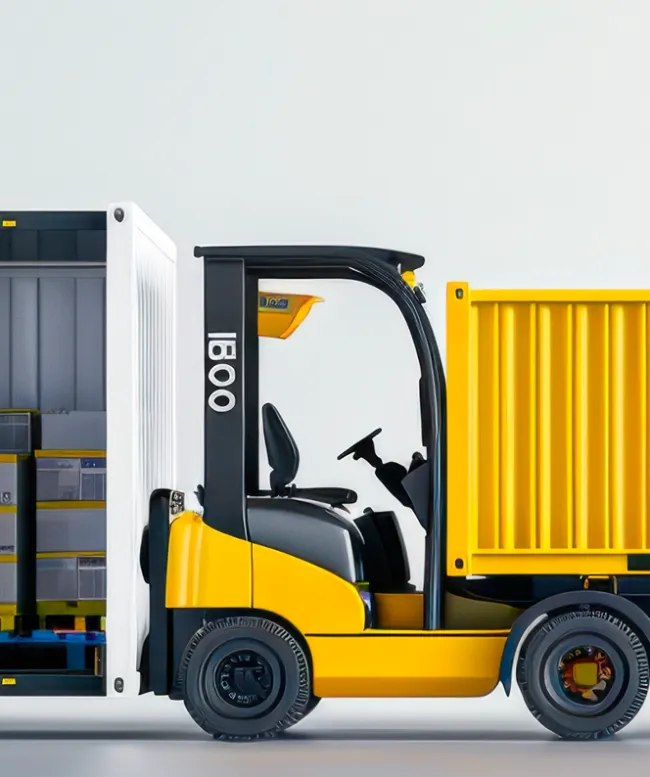
An integral part of the logistics chain is customs clearance of goods. At BSF, we provide customs clearance at the border in Novorossiysk as part of our "one-stop" transportation service. Customs clearance in the port of Novorossiysk by our team minimizes delays, downtime, and penalties.
What customs clearance means
Customs clearance is the process of declaring goods at the border, including submitting a declaration, paying duties and fees, and often undergoing inspection in accordance with the EAEU Customs Code. At BSF, we thoroughly explain to our clients what this entails — from determining the correct HS code to electronic declaration submission. This process is mandatory for all goods crossing the border of the Russian Federation, including those in Novorossiysk. Our company provides this service for both export and import operations.
Import and export operations differ from each other. For example:
- For imports, it is necessary to comply with the requirements of Russian legislation regarding the type of goods being imported, so as to prepare all necessary certificates, licenses, and permits in a timely manner for smooth customs clearance.
- For exports, currency control applies. Companies are required to provide documents confirming the receipt of foreign currency revenue. When shipping Russian goods abroad, it is important to familiarize yourself in advance with the destination country’s requirements for the type of goods, in order to properly prepare them for customs clearance upon arrival in the receiving country.
Our company’s experts will help you navigate all legal nuances and ensure proper customs clearance of goods. We handle various product categories, including dangerous goods, bulk, liquid, perishable, heavy-weight, containerized, large-sized, and oversized cargo. We work with participants in foreign economic activity: legal entities, including individual entrepreneurs.
Why and for whom is customs clearance in Novorossiysk needed?
Customs clearance in Novorossiysk is necessary for importers, exporters, foreign trade participants, and logistics companies to legally release goods arriving by sea. Proper and timely preparation for customs clearance allows you to save:
Time – by reducing the risk of port and temporary storage warehouse delays, and helping to avoid fines for exceeding container demurrage periods.
Money – which follows from the previous point, when the declarant checks the document package in advance, prepares the customs declaration, submits it to the electronic customs center, and monitors the release. This approach allows the declaration to be processed on the day of submission, avoiding demurrage fines when the container is already at the port but the declaration is not yet ready.
Our experience in logistics enables us to prepare for the customs clearance procedure in advance. Additionally, we practice preliminary declaration, allowing us to start the process while your cargo is still approaching the port.
Stages of customs clearance of goods
At BSF, the procedure follows this sequence:
1. Preparation of the declaration and documents
The preparatory stage is the foundation of the entire process. At this stage, all necessary documents are gathered and verified, including transport waybills, invoices, certificates of conformity, contracts, and documents confirming payment of related expenses (transportation, packaging, etc.). The declaration includes information about the goods, their value, country of origin, HS code, and delivery terms. Accurate completion of the declaration is critical, as errors can cause delays or additional inspections. Specialized electronic systems are used for processing.
2. Data verification by customs authorities
After the declaration is submitted, the authorities verify the information for compliance with legal requirements. This stage assesses data accuracy, HS code correctness, proper completion of declaration fields, accurate value declaration, and conformity with delivery terms.
If customs has questions, the applicant may be required to provide additional documents, such as quality certificates, product specifications, or documents confirming transport costs. The verification also includes analyzing the foreign trade contract and comparing its terms with the actual situation.
3. Payment of duties, fees, and taxes
Based on the verified information, all mandatory payments are calculated, including duties, VAT, and excise taxes (if applicable). Customs authorities may request confirmation of the declared value, especially if it is significantly below market average.
After calculation, the amount is paid to a special customs account (Unified Personal Account). It is important to consider payment deadlines: delays can lead to additional fees or temporary suspension of the declaration process. The account balance must be equal to or greater than the required amount.
4. Inspection and examination
During the inspection stage, customs officers verify the actual conformity of the cargo to the declared information. Inspection may include visual examination, unpacking, sample analysis, or laboratory testing.
Certain categories of goods (e.g., food products, children's clothing, medical equipment) are subject to mandatory sanitary, phytosanitary, or veterinary control. The extent of inspection depends on the risk of non-compliance with legal requirements and the specifics of the shipment.
5. Release and completion of clearance
After successfully passing all previous stages, the goods receive "released" status. Customs issues an electronic confirmation, allowing the goods to be sent to their destination.
If inaccuracies are found during verification, they must be corrected before clearance is completed. In such cases, the goods may be delayed only until all errors are corrected. After release, the goods proceed to the next stage of the logistics chain.
Declaration via electronic customs declaration posts
BSF uses electronic customs declaration posts, such as the Novorossiysk CED, Baltic CED, and Moscow CED, for remote submission of declarations 24/7. This reduces customs clearance time to as little as 1 hour while minimizing errors.
Cost of customs declaration processing
The base rate for processing a customs declaration is:
- Export (EC-10) – 12,000 RUB per declaration
- Import (IM-40) – 15,000 RUB per declaration
Customs representative and broker services in Novorossiysk
Through our company, you receive "turnkey" cargo clearance services. BSF provides the full cycle: HS code selection, calculation of duties and fees, completion and submission of the declaration. Our customs broker handles imports, exports, and transit under a customs representative service agreement with full guarantees.



Прямые договоры
с НЛЭ и НМТП
с НЛЭ и НМТП
Our services



Countries we work with

China

Vietnam
Turkey

Egypt

Israel

Syria

UAE

Saudi Arabia

India

Argentina

Pakistan

Brazil

Why customers choose BSF

Exclusive ocean freight rates
Thanks to our long-standing and successful track record in export shipments, we have earned the loyalty of key ocean carriers. This enables our clients to access unique freight rates for export and import flows, saving up to 20–30% compared to base tariffs.

Focus on complex cargo
We work with bulk cargo, full vessel lots, sawn timber, metal ingots, coils, big bags, oversized cargo and containerized shipments. Cargo accumulation and dispatch are handled smoothly, with full processing in Novorossiysk.

Unique stuffing and transshipment solutions
Our core know‑how lies in direct contracts with Novorossiysk ports covering re‑stuffing and transshipment of various cargo types. This ensures fast, safe and cost‑efficient handling for virtually any cargo.

Turnkey end‑to‑end service
From container delivery and removal to customs formalities and documentation, including interaction with FGBU “TsOKZ”, FGBU “VCR”, certification and permits – all processes are managed by a single provider. One contractor means fewer complications for your business.

Expertise in key industries
We have extensive experience working with the agro‑industrial sector, chemical industry, wood processing, mining and metallurgy. Grain logistics in vessel holds is one of our core specializations.

Extensive agents’ network
We maintain close working relationships with shipowners and operators and rely on a global network of agents. Our operations cover the ports of Novorossiysk, Saint Petersburg, Rostov‑on‑Don, Azov, Yeysk, Kavkaz, Astrakhan, Olya, Arkhangelsk and Aktau, with partner companies in Turkey, Jordan and the UAE.
Do you have any questions?
Fill out a short form and our specialists will contact you and answer all your questions.